Together on the Journey: Nurturing Dhamma as a Family
Background and Introduction
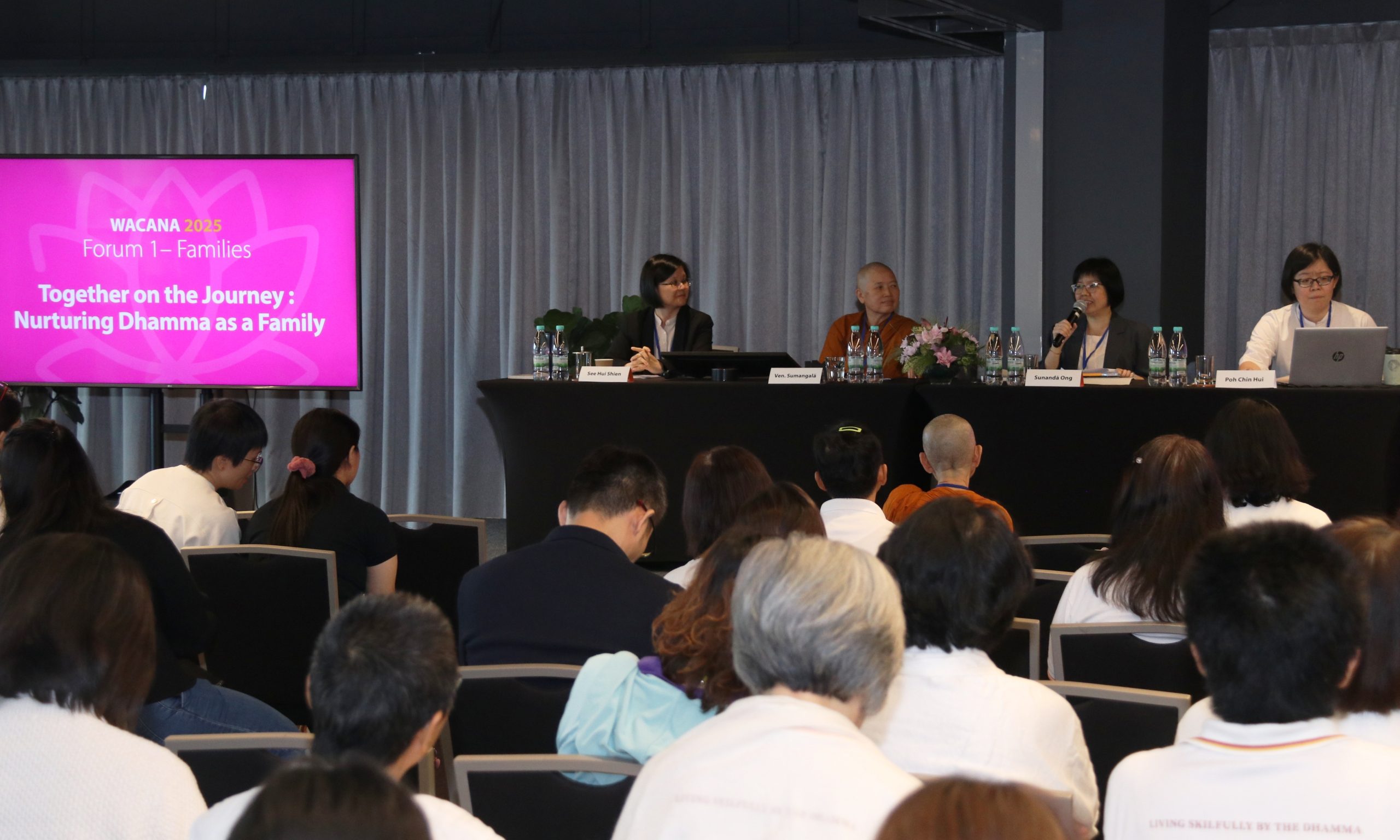
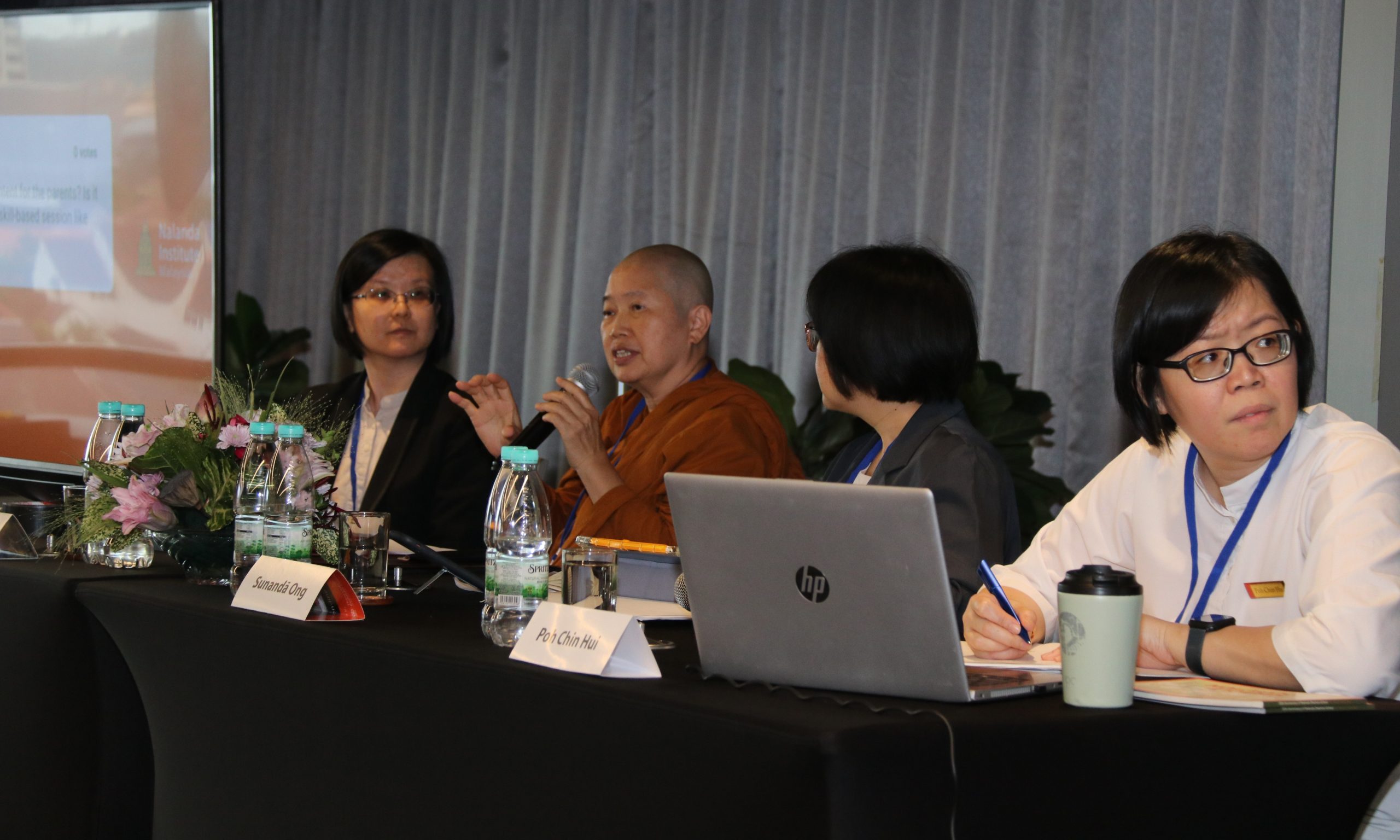
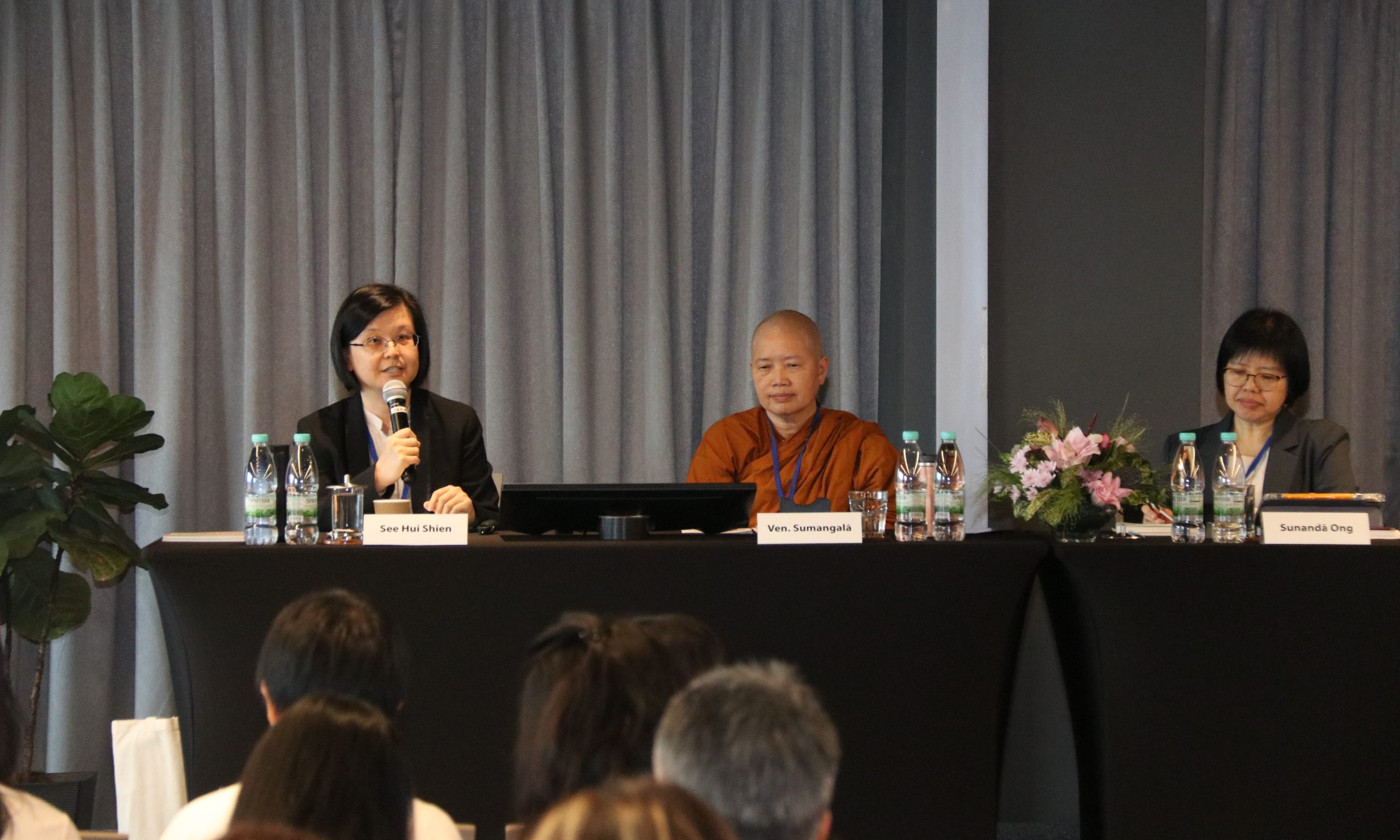
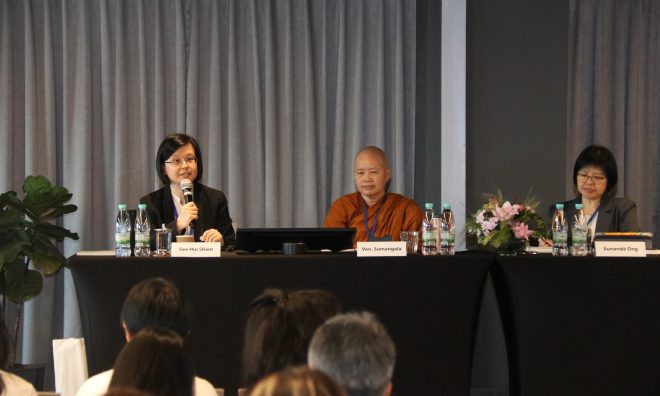
Sis Hui Shien commenced her presentation by giving the reasons for creating the Family learning programme. The impetus for the establishment of Nalanda Family Dhamma School (NFDS) arose from a critical observation and realisation that while many children were attending Dhamma Schools independently, the absence of parents in this journey created a gap. Children learn noble values, yet at home encounter an environment not fully aligned or reinforced with those principles. Parents though supportive, lacked avenues to develop their own spiritual practice alongside their children and feel uncertain how to guide the children in applying these values.
NFDS emerged as an integrated model where the entire family embark on the journey of Dhamma learning and cultivation. For parents this is an opportunity for spiritual growth as well as refine their parenting skills in alignment with the Teachings. This misalignment inspired the creation of a family-centred approach to Dhamma education, grounded in the principle of Pubbācariya, which means “parents are the first teachers.” Drawing from the Sigālovāda Sutta, the speaker emphasized that the family is the primary institution for moral and spiritual learning, where parents guide children away from harm, establish them in goodness, and model ethical behavior, while children, in turn, honor and uphold family dignity. It restores the balance that spiritual growth is sustainable and strengthened when undertaken together as a family.
The NFDS was first launched in Nalanda Education Outreach Centre-Kuala Lumpur in 2023 and later expanded to Nalanda Education Outreach Centre-Johor Bahru in 2024.
Approach and Structure – Holistic Buddhist Education
The pedagogical approach emphasises integrated, holistic and practical Dhamma education based on three principles of structured learning (learning together), experiential cultivation (practicing together) and family-centred practice (serving together).
- Structured learning – parallel sessions for parents and children where they explore the same learning theme (example generosity). While children engage in storytelling, role-playing, and games, parents learn the Buddha’s teaching on dāna (generosity) as well as discuss practical ways to incorporate acts of kindness into family routines. Combined sessions include guided meditation and chanting, designed to be simple and suitable for all ages.
To reinforce learning beyond the classroom, families are given creative challenges such as the Dana Marathon, which encourages them to perform multiple acts of generosity throughout the week, and the Kindness Tree, where families record and share acts of kindness as part of their ongoing cultivation. These activities help transform Dhamma values into daily habits, making generosity and compassion a natural part of family life.
- Experiential Cultivation – Dhamma is best learned through practice. Preparing meals for offerings to the Sangha, community clean-up projects, instil values of service and humility. Beyond the classroom, families are encouraged to undertake spiritual cultivation during Buddha Day, Gimhana retreat period. These shared experiences strengthen inner qualities of faith and mindfulness and support collective energy of the Buddhist community.
- Family-centred – emphasis on family bonding through special events such as food reflection before meals, Metta meditation, family camps, study tours, sports day amongst others. By engaging in mindful communal chores, morning and evening reflections create cherished memories infused with Dhamma values.
Another distinctive feature is the emphasis for gratitude through the “Tea Offering Ceremony” during Chinese New Year and Parents Day Celebration. These occasions provide opportunity to formally express respect and appreciation. Parents on the other hand reflect on their role as guides and nurturers. By embedding these practices into the School programme families display gratitude not just as a feeling but a living expression that supports long term well-being.
Results and Outcomes
Although the NFDS is in its infancy stage, Sister Hui Shien shared several encouraging outcomes observed since the programme’s inception.
- Strengthening Family Bonds – Parents report fresh and new insights into their children’s personalities, struggles and aspirations. Children report appreciation for their parents’ involvement by being supportive, understanding and encouraging. It reduces generational gaps and fosters open dialogue.
- Tangible Character development – Families report observable positive changes in character. Parents, having internalised the Dhamma based parenting approaches respond with patience rather than impulsive reactions. This subtle but significant shifts create harmony and appreciation and long-term family well-being.
- Cultivation of a Supportive Community – It has nurtured a community of like-minded families. A strong support network provides resilience in navigating social problems and pressures. Children form friendship grounded in wholesome value. Moreover, many families extend their engagement beyond the school, participating in meditation sessions and volunteer for community projects.
Future Hope and Direction
As the NFDS is still in the development stage, Sis Hui Shien presented several strategies to enhance and strengthen its impact to reach more families namely:
- Addressing Contemporary Challenges – the presentation of the timeless Dhamma must be practical and relevant to modern unique challenges from digital dynamics to academic pressures, cultural and economic values. The Dhamma must be delivered in such a way to build emotional resilience and ability to make ethical and wise decisions in daily living.
- Capacity Building for Parents – offer and incorporate regular Dhamma-based parenting skills, emphasis on parents’ spiritual capacity through meditation, chanting and Dhamma study to equip them to embody patience, compassion and wisdom. Nurture parents to become effective caregivers and spiritual role models.
- Facilitators Training and Development – NFDS caters to the needs of a wide spectrum from young children, teenagers and parents. Facilitators need to be well-prepared in addressing the psychological, emotional and spiritual needs of different age groups. Effective training goes beyond knowledge and practice of the Dhamma to the spheres of skills in child development, adolescent psychology, communication and age-appropriate pedagogy.
- Integration with Broader Buddhist Community – NFDS cannot operate in isolation but be part of a larger ecosystem of Buddhist education. Collaboration with other units in the temple or Society such as teens, youth, leaders and adults forms a link throughout providing crucial support in this journey.
- Cultivating Future Generation of Leaders – Beginning with an end in mind, NFDS ultimate aim is to build future leaders, strong spiritual wellness at home and confident spiritual guides that will form a wise and compassionate society that has local and universal impact.
Conclusion
Sister Hui Shien concluded by inviting participants to reflect on how this model could be adapted within their own communities, emphasising that nurturing Dhamma in families is a collective responsibility.
As the theme of WACANA 2025 is “Awakening to Community Well-being – Contemporary Approaches”, NFDS offers a fresh model of bringing families to grow together for their own domestic happiness and contribute to the broader Buddhist community.
Forum 1 Conclusion – Together on the Journey: Nurturing Dhamma as a Family
While it is undeniable that serving and guiding followers of our Dhamma community is an important mission for Buddhist temples and Centres, putting the onus of one’s children’s spiritual growth solely on Dhamma Schools is an oversight of parental duty and responsibility. Parents share a responsibility to teach their children since it is significant that they spend more time with their children.
While recognising parents' and the community share a critical role in shaping our children’s character and moral values, not every temple or Dhamma Centre provides services that equip parents in this regard. Often, they do not offer an explicit spiritual education curriculum and overlook to emphasize the vital role of parents in the growth of children’s faith. Rarely is found the link between the teaching at home with what a child receives from the Dhamma Centre. Many parents are clueless about what their children have learned in Dhamma School and do not think they need to educate them spiritually.
Acknowledging that we have a mutual responsibility for nurturing faith in parents, children, and the community, both ARK and NFDS have introduced a system of spiritual education that addresses this disconnect in the mission of Dhamma education:
- Children raised without spiritual guidance may more often feel unmoored, without truly understanding the world around them, looking to peers or screens for validation rather than inner strength.
- When parents fail to model Dhamma principles or allow worldly influences to dominate the home, children are more likely to struggle with finding their own purpose, stability, and meaning in life.
- A failure to establish routines like family devotions can lead to children becoming “inflamed”; by worldly temptations.